At low tide they look like a tangle: arching roots, grey mud, a smell of salt and decay. Mangroves are easy to overlook and were long treated as wasteland to be cleared. Coastal communities that have lived through strong typhoons tend to see them differently. These forests at the edge of the sea do quiet work that is expensive, and sometimes impossible, to replace.
Trees that live between tides
Mangroves are trees and shrubs adapted to a place where few plants survive, the zone that is flooded by seawater at high tide and exposed at low tide. They cope with salt, with waterlogged mud that holds little oxygen, and with the daily push and pull of the water. Some species, such as bakhawan, stand on stilt-like prop roots. Others, such as pagatpat and bungalon, send up rows of finger-like breathing roots that take in air above the mud.
The Philippines is home to a large share of the world's mangrove species. Different species favor different positions on the shore, from the wave-beaten seaward edge to the calmer banks of tidal rivers. That zoning matters a great deal when people try to plant them.
What a mangrove belt does
The benefits reach well beyond the shoreline itself.
- Softens waves. The dense roots and trunks slow moving water, which reduces the force of waves and can lessen the reach of a storm surge. A wide, healthy belt protects better than a thin line of trees.
- Holds the shore. Roots trap sediment and help keep coastlines from wearing away.
- Feeds the catch. The sheltered water among the roots is a nursery for young fish, crabs and shrimp that later move to open water and to fishers' nets.
- Stores carbon. Mangrove soils lock away large amounts of carbon, more per hectare than many forests on land.
- Filters runoff. The forest catches silt and some pollutants before they reach seagrass beds and coral reefs.
No forest can stop the strongest surge on its own, and mangroves do not replace evacuation or sound building. They are one layer of protection among several. What makes them unusual is that this layer also produces food and income while it stands.
What makes them unusual is that this layer also produces food and income while it stands.
How the forests were lost
Much of the country's original mangrove cover disappeared during the past century. The largest single cause was conversion to fishponds for milkfish and shrimp, encouraged for decades as a way to raise food production. Mangroves were also cut for firewood, charcoal and building poles, and cleared for settlements, ports and reclamation. Cutting them is now prohibited by law, but enforcement along a long and scattered coastline is uneven, and many ponds that were carved out of mangrove forest now sit idle.
Why some planting fails
Replanting has been popular with schools, companies and government agencies, and results have been mixed. A common mistake is planting bakhawan on open mudflats and seagrass beds at the seaward edge, because the seedlings are easy to collect and to set out in neat rows. Those sites are under water for too long each day, and many seedlings die. Seagrass beds are valuable habitats in their own right and are not improved by being planted over.
Scientists who study restoration recommend a different approach: match the species to the zone where it grows naturally, plant in the middle and upper parts of the tidal range, and where possible return abandoned fishponds to forest by reopening them to the tides. In some places, protecting an area and letting it regrow on its own works better than planting. Survival after several years, not the number of seedlings on planting day, is the honest measure of success.
What communities gain
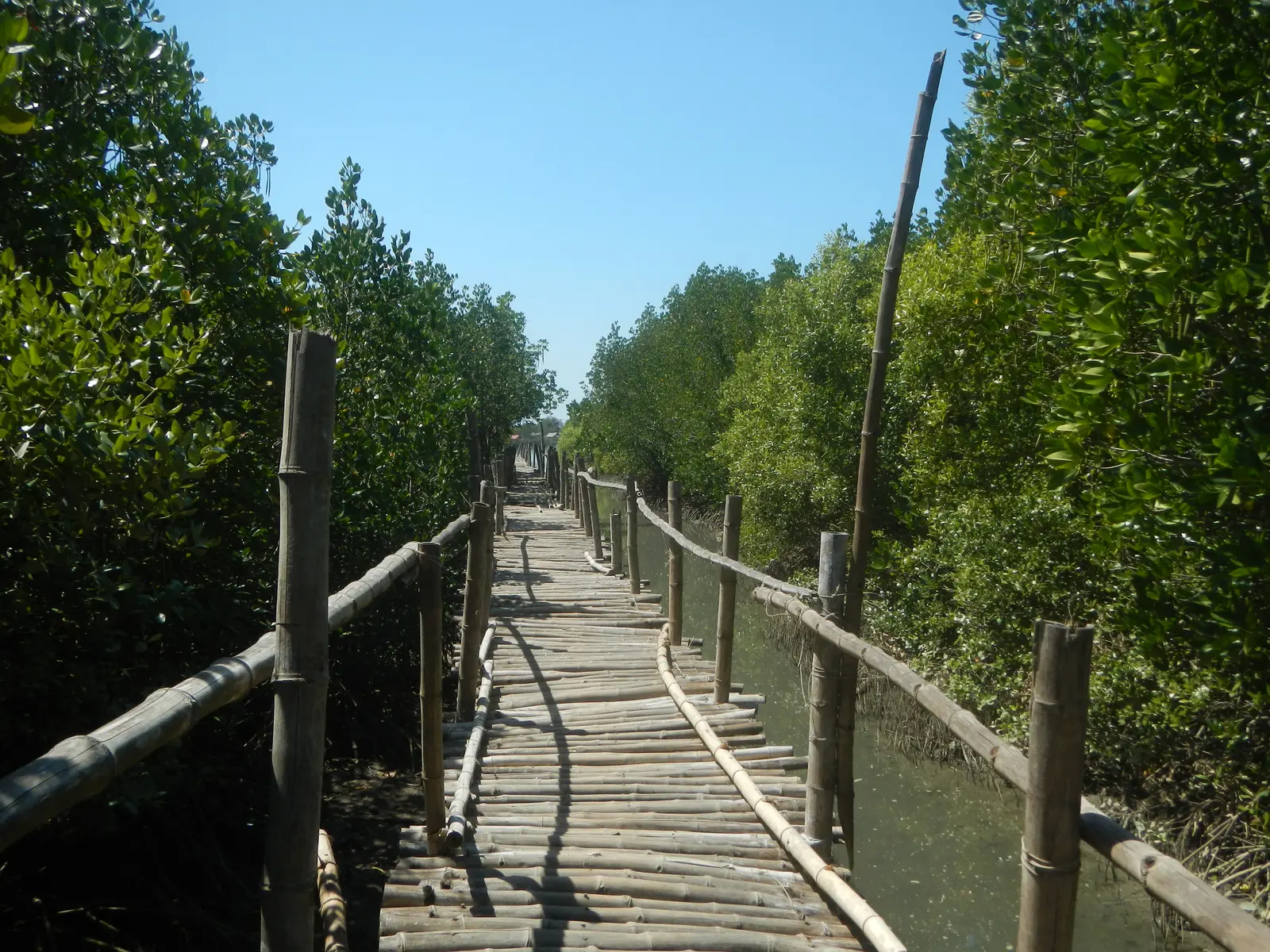
The sites that have lasted are usually those where local people manage the forest and benefit from it. The Bakhawan Eco-Park in Kalibo, Aklan, which grew out of a community planting project, is among the best-known examples, drawing visitors along a boardwalk through the trees. Elsewhere, fishers' associations guard mangrove areas because healthy stands support the crabs and shellfish they gather. For a coastal barangay, a mangrove forest is neither wasteland nor decoration. It is part of the village's defenses and part of its pantry.